
Patna Pink Buses: Driving Women Towards Empowerment
Safe Rides, Brighter Futures: How the Pink Bus Boosts Women’s Opportunities
By Akanksha Sinha
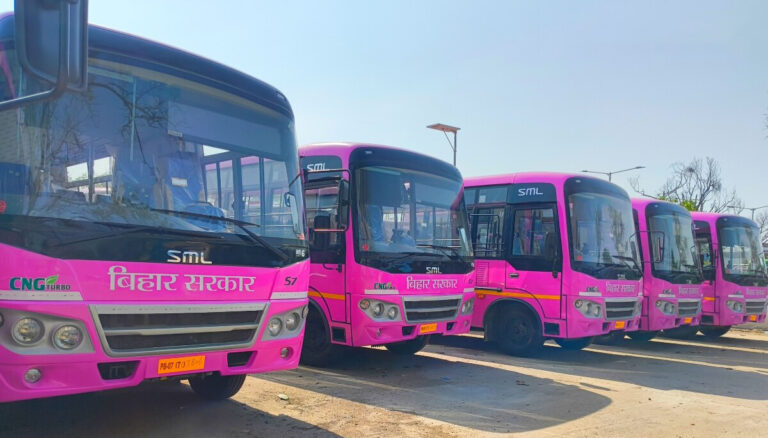
Public transport can be a lifeline – but for women in Bihar, it has often been a source of stress and anxiety. Overcrowded buses, long waits, and the constant fear of harassment make travelling a challenge. With the introduction of the Patna Pink Bus, public transport is no longer just a means of travel – it is a gateway to education, jobs, and independence for women.
What is the Patna Pink Bus Initiative?
The Patna Pink Bus initiative, launched in May 2025 by the Bihar State Road Transport Corporation (BSRTC) in partnership with SML Isuzu Limited (SMLI), addresses women’s safety and mobility issues in public transport. It’s 22+1 seater CNG buses feature CCTV cameras, GPS tracking, panic buttons, mobile charging points, and female conductors.
Currently operating across six cities – Patna (8 buses), Muzaffarpur (4), Darbhanga, Gaya, Bhagalpur, and Purnia (2 each) – the initiative provides safe, reliable travel for education, work, and daily errands. Bus fares range from ₹6 to ₹25 per ride, depending on the distance. Monthly passes are available at ₹400 for female students and ₹550 for working women, making it affordable for commuters.
The buses operate daily between 7:00 AM and 8:00 PM, covering key routes to schools, colleges, workplaces, and markets. As part of the initiative, the Chalo app has been introduced to let passengers see real-time bus locations, ticket fares, and timings digitally with ease.
The program also employs women as conductors and drivers, further contributing to gender-inclusive employment and empowering women in Bihar.
Improving Women’s Participation in Education and the Workforce
Since its launch, the Patna Pink Bus service has carried over 33,000 women, and by September, daily ridership reached 1,500 – 2,000 passengers. Starting with just 20 buses, the fleet expanded rapidly with 80 new additions — 22 in Patna alone, bringing the total close to 100 buses. Affordable monthly passes for students and working professionals are making education more accessible, while also supporting women’s entry into the workforce.
Beyond transportation, the service empowers women entrepreneurs by enabling travel to training programs and markets. The initiative focuses on a two-phase residential training program that prepares women drivers with essential skills and on-road experience. Notably, six young women from Bihar’s Musahar community have completed automobile repair training through the Nari Gunjan initiative and are now set to drive pink buses, marking a significant step towards economic independence.
Why Public Transport Failed Women — And How the Pink Bus is Fixing It
In Bihar, what should be a simple bus ride often turns into a test of endurance for women. Overcrowded buses force them into cramped spaces where catcalls and unwanted stares are routine, while unsafe autos, often driven by reckless teenagers blasting vulgar songs, turn every ride into a gamble . A journey meant to reach school or work too often becomes about surviving the commute with dignity intact. Families, worried about safety and rising costs, frequently discourage daughters and wives from traveling far. These barriers keep women inside, shutting them out of education, jobs, and equality.
This is where the Pink Bus initiative steps in. By integrating everyday conveniences with structural upgrades, it bridges gaps that once kept women grounded. No more fumbling for loose change or waiting endlessly at a bus stop – the Chalo app lets women buy tickets on their phone, track live bus locations, and keep timings right in their pocket. Beyond digital ease, the buses offer quiet reassurances: women conductors and officers, from cameras to trackers, healthcare support like pad dispensers – working silently in the background. Routes now stretch into areas like Bihta, Paliganj, and Bailey Road, cutting out the unsafe auto rides or long walks women once had to endure.
Where families were once consumed by worry over daughters and wives traveling alone, the Pink Bus now let’s them breathe easy – and this new confidence allows women to step out, work, and truly rock the world.
The Digital Drive: Transforming Bihar’s Mobility
The Chalo app is more than a convenience tool — it represents Bihar’s quiet digital revolution in mobility. Bihar’s digital turn in mobility isn’t just about speed — it’s about equity. Smart tools are transforming how people move, connect, and access opportunity. In a state once limited by safety gaps, digitization brings confidence, convenience, and dignity to every journey.
Bihar can take cues from Bhubaneswar’s smart mobility model, where data-driven systems and gender-sensitive planning have made public transport more efficient and secure. Integrating such digital approaches can help Bihar build a transport network that’s not only smarter but also more inclusive. When real-time tracking replaces uncertainty, and digital payments replace fear, women reclaim both time and confidence. The challenge now is to sustain this progress, making technology an ally in every woman’s journey.
Driving Women’s Careers Onboard and Beyond
Employment under the Pink Bus initiative extends well beyond the driver’s seat. Women are stepping into roles as conductors, safety monitors, and ticketing staff, while newer digital jobs — like route scheduling, e-ticketing through the Chalo app, and GPS tracking — add professional pathways that didn’t exist before.
To sustain this, BSRTC has launched a residential programme to train 2,000 women drivers in phases, with safe centres equipped with proper facilities. As mentioned earlier, the Nari Gunjan programme shows how women from marginalised groups are also entering repair and driving roles, making the initiative about inclusion as much as numbers.
Women are taking up transport jobs directly, and at the same time, safer travel is helping many others access education, workplaces, and small businesses. The Pink Bus is thus creating employment both inside the transport system and across Bihar’s wider economy.
How can women’s participation in transport sector employment and in the planning sector impact inclusive urban transport planning?
When women step into transport jobs and planning roles, they make mobility reflect lived realities — not just statistics.
They notice what others overlook: dimly lit stops, unsafe routes, missing toilets, and costly fares. Because they relate to these struggles — they’ve lived them, endured them, and understand what safer, fairer travel truly means. Their leadership ensures transport works for everyone — especially those often left out.
The data now confirms what experience has long shown: when women lead, systems change. As per the Periodic Labour Force Survey, Bihar’s story of women’s employment is one of dramatic progress — rising from a mere 4.1% participation rate in 2017–18 to 30.5% in 2023–24. India Today notes that this shift is not just numerical but transformational, reflecting growing opportunities, changing mindsets, and the state’s push toward gender-inclusive development.
A Nikore Associates study found that in cities with free or subsidized bus fares, women save more than half of their monthly travel expenses — savings that often go toward essentials like food, healthcare, and children’s education.
Sustaining Safe Mobility: Policies and Partnerships That Last
The Pink Bus is a strong beginning, but lasting impact will depend on long-term planning. Bihar needs policies that guarantee women’s safety features — CCTV, panic buttons, GPS, female staff — in all public buses, not just dedicated fleets. Infrastructure upgrades such as well-lit bus stops, clean waiting areas, and reliable CNG supply are essential to keep services consistent.
Equally important are partnerships. BSRTC has worked with Canara Bank and Worldline to launch digital ticketing, making cashless payments and app-based bookings easier across the network. Special pass camps in women’s colleges further simplify access to affordable monthly passes. At the same time, the Chalo app allows women to track buses and recharge passes instantly, while collaborations with SML Isuzu ensure reliable fleets. Together, these efforts show how government and private partners can scale innovation.
If such initiatives continue, the Pink Bus can grow from a six-city project into a statewide model for safe, gender-inclusive mobility.
Community, Coalition, and Lasting Progress
Community response has been at the heart of the Pink Bus’s early success. In just two months, ridership surged from about 5,000 women in May to over 28,000 by June, a clear sign of growing trust. Outreach through college pass camps is making affordable tickets easy to get for students, while the Chalo app reduces the stress of queues and cash by letting passengers’ recharge and track buses in real time. What seem like small fixes are, in reality, making families more reassured and women more independent in their journeys.
Harit Safar redefines mobility as more than movement — it is about inclusion. The initiative supports and amplifies government policies like the Pink Bus Initiative, advocating for transport systems that serve women as commuters, professionals, and decision-makers. Through workshops and community dialogues, it brings local voices into transport planning and decision-making. Its evidence-based approach bridges the gap between data and lived experience, making reforms both data-driven and deeply human. The campaign’s focus on tier-2 and tier-3 cities highlights the need for context-specific solutions where infrastructure gaps and safety concerns run deepest.
The movement draws strength from community engagement and local research, proving that when women and youth lead the way, transport becomes more than a service — it becomes social progress in motion. At a campus forum in Shri Arvind Mahila College, young women described their everyday struggles – from harassment on the way to class to the lack of safe waiting areas. Feeding such lived experiences into transport planning means the Pink Bus is not just a government promise, but a response shaped by real voices.