
From Pollution to Possibility: Reimagining the Cities of Bihar
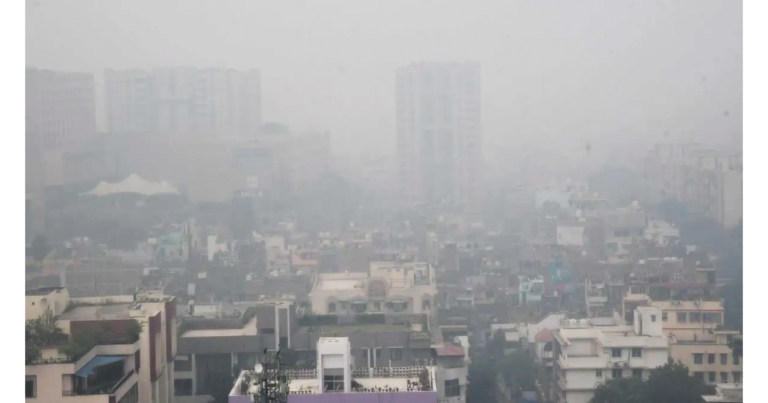
As the morning mist drifts over Patna, there’s a harsh truth hidden beneath the pale sun: the haze isn’t fog — it’s pollution. On 29 October 2025 at 11:10 AM, the city’s Air Quality Index (AQI) stood at 125 (Poor), with PM 2.5 at 46 µg/m³ and PM 10 at 105 µg/m³ — well beyond safe limits. Halfway through 2025, Bihar didn’t just make the pollution list — it dominated it with Patna, Sasaram, and Rajgir all listed in the nation’s top ten most polluted cities.
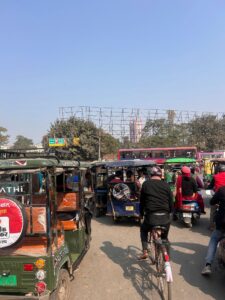
In the heart of this smog-choked city lives Adya, a third-year student at A.N. College near Kankarbagh. Every morning, she steps out for college, locking her door with a sigh — her only shield against the city’s air, a flimsy mask. During COVID, she thought the mask would be temporary, just a phase of history. But now, it’s simply how she lives.
“Funny thing,” Adya says, tugging her mask tighter. “The lockdown ended years ago, but tell me — doesn’t it still feel like we’re trapped inside the air?”
She pauses for a moment, her eyes following a line of smoke curling above the autos. “Every step feels heavier,” she admits quietly. “When I was a kid, I’d run out during rains just to feel the wind. Now, I just want to get indoors before it hurts to breathe.”
For Adya and millions like her, this isn’t just pollution — it’s a quiet, invisible lockdown that never ended. No curfews, no sirens this time — just the slow realization that the danger isn’t outside anymore. It’s in the air itself, following you to your home, sitting beside you in class, whispering that progress came with a price tag. You can’t see the bars, but you feel them in your lungs — a cage built from exhaust, indifference, and delay.
What is the Patna Pink Bus Initiative?
By 8:00 AM, Patna’s streets blur into a haze of honking buses, restless autos, and hurried footsteps. For most, the day begins not with coffee — but a cough. According to the 2025 NCAP progress review, 20 of Bihar’s 23 cities recorded PM 2.5 levels roughly four times above WHO norms, confirming what every Bihari already knew — the air has turned from familiar to fatal. The numbers don’t exaggerate — they expose. IQAir’s October 2025 data shows Patna breathing between 130 and 150 AQI, a range politely labeled “Poor,” but it feels more like punishment.
And then came post-Diwali — when celebration turned to suffocation. The Print recorded Patna’s AQI climbing beyond 220, reducing the city’s skyline to a blur.
At Patna Medical College, a doctor sighed.
“You don’t need to be sick for the air to hurt you — just alive. In this city, illness isn’t something you catch — it’s something you breathe.”
The Road Less Driven — How Walking and Cycling Can Heal the City
In the middle of all this smog and noise, there’s an idea quietly waiting at the street corner — one that doesn’t hum, honk, or pollute. Walking and cycling. Simple, old-school, human-powered — yet possibly Bihar’s smartest step toward breathable progress. For years, cities have been built only for machines, not for people. Because of that, obesity has become our number one enemy too. Roads replaced trees, cars became modern, and now AI drives through this endless road rush — but the air we breathe has turned unbreathable. We cut down trees to make mobility easier, and in doing so, cut down our own chance to breathe freely. It filled the skies with greenhouse gas emissions and blurred the line between progress and pollution. The result? Poorer air quality, rising road injuries, and a daily struggle just to breathe safely. Once considered a basic act of life, walking and cycling — also known as active mobility — have now become rare artifacts. But they remain the city’s most overlooked heroes — underfunded, undervalued, waiting at the crossroads while cars speed by without a glance.
Yet even in this chaos, some people are quietly reclaiming their space on the road. Adya is one of them. One evening, instead of taking an auto, she decided to walk home from college. It wasn’t a grand decision — just a twenty-minute walk past the chaos of Kankarbagh — but it felt different. The air still stung, but for once, she wasn’t part of the smoke — or the reason it lingered. According to a study in PNAS, every short trip like hers can save nearly 0.5 kilograms of CO₂, and if enough people did the same, Bihar’s cities could cut urban transport emissions by up to 10%.
Walking and cycling don’t just clean the air — they heal the people who breathe it. Regular walking and cycling boost physical and mental well-being, lowering the risk of cardiovascular disease, reducing overall mortality by 11% for those who make it a habit. Adya didn’t know the data, but she could feel the truth — her lungs felt lighter, her thoughts quieter, and for once, the city seemed to breathe with her, not against her.
“If one walk can save air,” Adya smiled faintly, “maybe a million steps can save a city.”
Pedaling Towards Progress — Cities That Transformed on Two Wheels
Small, Low-Cost Sustainable Solutions
When Adya scrolls through her phone between lectures, she pauses on videos from cities that have done what hers still dreams of — taking back their streets. Istanbul, Paris, Bogotá, Jakarta — once jammed with horns and haste, now humming to the rhythm of bicycles.
During the COVID-19 pandemic, the world unintentionally ran an experiment. With lockdowns silencing the usual traffic chaos, cities got a rare sight of what cleaner air and quieter streets could feel like. For the first time in decades, people heard birds chirping over horns, breathed fresh air instead of the toxic fumes of vehicles, and walked without passing hasty, noisy cars.
And then something unexpected happened — cycling took over. Almost overnight, roads once ruled by cars fell silent, and the world got a flashback to the early twenties — when bicycles ruled the streets. There was no traffic, just the steady rhythm of pedals turning and air that finally felt clean. What governments had promised would take years to achieve — cleaner air — happened in just two. Urgency turned into innovation.
What once existed only as ideas suddenly became non-negotiable actions, and that’s when things truly began to change. These small, quick experiments reshaped big urban realities. As reported in the Cycling Cities Campaign Report 2025 by ITDP, the cities together covered 1.46 billion kilometres on protected lanes and cut 877 million vehicle kilometres, avoiding 3 million tons of CO₂ emissions by 2050.
Istanbul even hosted a children’s bike festival, teaching kids the joy of riding through streets that once belonged only to cars. Because change doesn’t begin in policy rooms — it begins in playgrounds.
As Adya watches a clip from that festival, she laughs softly. “Look at them,” she says. “They get the wind before they get the Wi-Fi.”
As her phone screen fades, Adya’s thoughts drift further — to cities that are already living the future she dreams of.
According to the UCLA Active Travel Study (2025), Nairobi now dedicates 20% of its transport budget to walking and cycling, after involving informal traders in designing safer pedestrian routes. In contrast, Osaka, Japan, quiet lanes and steady traffic remind the world that mobility doesn’t need scale to succeed — even humble streets can move like Copenhagen or Amsterdam, one pedal at a time.
“If we incorporate even a fraction of what these cities did right,” Adya says, “we won’t just chase change — we’ll create it.”
Adya’s walk was never meant to be symbolic — but in a city where clean air feels like a privilege, even a step can start a rebellion. The question is, can Bihar turn those steps and pedal strokes into a movement that reshapes its streets?
On Footpaths, Accessibility, and Pedestrian Safety: Where Does Bihar Stand — and What Needs to Change?
Travelling to college on foot, Adya realized it felt a lot better — lighter, calmer, and oddly freeing. Slowly, she started using her bicycle and sometimes walked part of the way before taking an e-rickshaw instead of the usual fuelled autos. Step by step, she began to understand that the true meaning of sustainability in mobility wouldn’t come only through CNG or electric vehicles, but through active mobility — people choosing to move, not just ride.
But Adya’s small steps hint at a bigger truth — India is walking less, and it’s showing. Obesity has quietly become one of the country’s leading health concerns. Part of the answer lies in genetics, say doctors, but lifestyle choices — especially our increasing dependence on motorized transport — play a major role (Times of India, 2025). When movement leaves our streets, health leaves our lives.
And yet, even as we rush to fix the problem, our solutions still seem to run on wheels. Electric Vehicles (EVs) are being aggressively promoted by the government as a sustainable alternative. EVs are promising because they can reduce fuel use and help clean the air. But it still isn’t enough. As of 2025, nearly 50% of India’s electricity still comes from fossil fuels (Ministry of New and Renewable Energy,2025). So, switching to EVs alone can’t make our cities truly sustainable. And while they may hum quietly, electric cars still add to the same traffic and the same crowded roads.
As Adya pedalled past a row of parked electric cars, she couldn’t help but notice something — they still sat still. Same roads. Same congestion. Same stale air.
“EVs are progress,” she said, “but they won’t solve what’s missing — movement. We can’t drive our way out of a health crisis. The city doesn’t just need cleaner vehicles; it needs moving people.”
Designing Cities for People, Not Just Cars
As Adya reached the crossroads near Rajendra Nagar, she slowed her bicycle, watching a group of schoolchildren cross a road without a zebra line — their steps uncertain, their breaths hurried. “Funny,” she murmured, “we built roads for cars but forgot the ones for people.” In that simple thought lay the blueprint for a better city. To let its cities breathe again, Patna needs streets that serve humans first.
Across the world, cities are already turning this thought into action. In Israel, new neighborhoods in Tel Aviv and Jerusalem are being designed around the “15-minute city” idea — where schools, markets, and clinics are just a short walk or bike ride from every home. Dubai has its own version, the “20-minute city,” aiming to keep most residents within an 800-meter walk of everything they need — from shops to parks to workplaces (source: Wikipedia). The idea is simple yet powerful: build cities around people, not vehicles.
If Bihar borrowed even a page from these models, it could begin by making every neighbourhood in Patna walkable — with safe sidewalks, clear crossings, and essential services just a few minutes away or a short e-rickshaw ride. Sometimes, small changes make the biggest difference: when access gets closer, pollution drifts farther — and the city finally begins to breathe again.
As Adya put it, “It isn’t impossible — if the government and citizens walk together, the city will too.
The Comeback Ride: Reclaiming the Fun
When Adya took her cycle out after years, it wasn’t planned — just something she felt like doing. The first few pedals were shaky, but soon the road felt familiar again. The wind on her face reminded her of childhood — racing down her lane, laughing, not caring where she was going. Cycling, she realized, wasn’t just about reaching somewhere. It was about feeling free again, the way she once did as a kid.
As the days passed, she started noticing little changes. Her body felt lighter. The constant tiredness began to fade. Her posture improved, her energy came back, and even the fog in her thoughts began to clear. What used to be a dull routine started feeling like part of a rhythm she’d lost — one she didn’t need a playlist for.
Research backs that feeling up. Studies show that cycling triggers a powerful chemical mix — endorphins, dopamine, and serotonin — the same trio that lifts mood and calms the mind. Regular cyclists report ‘lower stress levels, sharper focus, and better sleep’. It’s movement that doubles as meditation, giving both body and brain a reset. Scientists even call it a “natural antidepressant,” noting that just 30 minutes of cycling can reduce anxiety and boost creativity.
Adya didn’t care about the science; she cared about how it felt. The quiet satisfaction of moving, the calm that followed. Somewhere between the pedals and the pauses, she found a piece of her old self — the one who once rode without thinking about pollution, deadlines, or AQI levels.
“I took the cycle once instead of the auto,” Adya said. “Now I can’t stop. My body thanks me every day — and so does my mood.”
Pedals of Purpose: When Youth Take the Lead
Adya’s saw the banners and the buzz of the Khelo India Youth Games 2025. Dozens of young cyclists were flying down Patna’s roads — fierce, focused, free. For once, it wasn’t about the medals, it was about movement. “For once,” she thought, smiling, “Bihar isn’t stuck in traffic — it’s moving.”
That sense of pride deepened when she read about Bihar’s Mukhyamantri Cycle Yojana — the same school bicycle scheme that once gave millions of girls their first taste of freedom — now being replicated in African nations with UN support. For a state once mocked for its roads, that was no small thing. “Maybe we’ve been building something right all along,” Adya smiled.
But Bihar’s progress isn’t just rolling out through policies — it’s being pedaled forward by its young people. Across Patna’s campuses, students are joining the Harit Safar campaign to push for cleaner, more inclusive transport. In 2024, during its Campus Meets and Yuva Samvaads, students mapped unsafe routes, highlighted missing cycle lanes, and even drafted letters to local authorities demanding safer footpaths and green corridors.
Adya smiled as she scrolled through Harit Safar’s page, seeing young volunteers across Bihar documenting tree-lined roads. It wasn’t activism in speeches — it was action on streets.
She smiled and said quietly, almost to herself, “The youth are the new light — the new hope. We are the future, and this time, we’re not waiting for change. We’re becoming it.”
The Bicycle Blueprint: From Traffic to Transformation
For Bihar, the blueprint of cleaner, kinder cities doesn’t need to be imported — it’s already here, hidden in plain sight. Every cycle lane unpainted, every footpath unfinished, every student choosing pedals over petrol — they’re all small steps toward transformation.
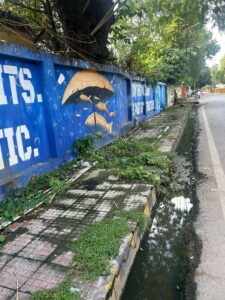
Every turn Adya takes shows her two Patnas — one of chaos, one of chance. Broken paths and missing lanes can’t hide the hope still breathing beneath. Broken paths and missing lanes can’t hide the hope still breathing beneath. And that hope is growing louder. From youth campaigns to city pilots, Bihar is beginning to rewrite its story. But for that story to last, it needs a stronger script — policies that don’t just promise change but pave the way for it.
To truly build a bicycle-friendly Bihar, the journey now depends on smart, steady action. The first step is simple: make walking and cycling safe. That means real cycle tracks — not just painted strips — proper sidewalks, working streetlights, and crossings designed for people, not vehicles. Cities like Patna, Muzaffarpur, and Gaya could easily create safe corridors linking schools, colleges, and markets — routes that invite people to walk or ride instead of drive.
But the real spark won’t come from paperwork — it’ll come from people. Campaigns like Harit Safar are already showing what collective action looks like. Volunteers marking unsafe zones, students designing green routes and raising their voices to the government.
Adya joined one such ride and later said with a grin,
“We didn’t change the city that day — we just reminded it what movement feels like.”
Change doesn’t always roar; sometimes it just rings from a bicycle bell.